Honorary Membership Award
Honorary Member Award: This award is established to recognize individuals for their exceptional contributions to the field of spectroscopy and is the highest award given by the Society. Regional, Technical, or Student Sections, individual members, the Awards Committee, or the Executive Committee may make nominations for the Honorary Membership Award. Nomination material should include a letter of recommendation with supporting documentation regarding the nominee's contributions to the field of spectroscopy, a current CV, and a short bio.
2026 Award Winners
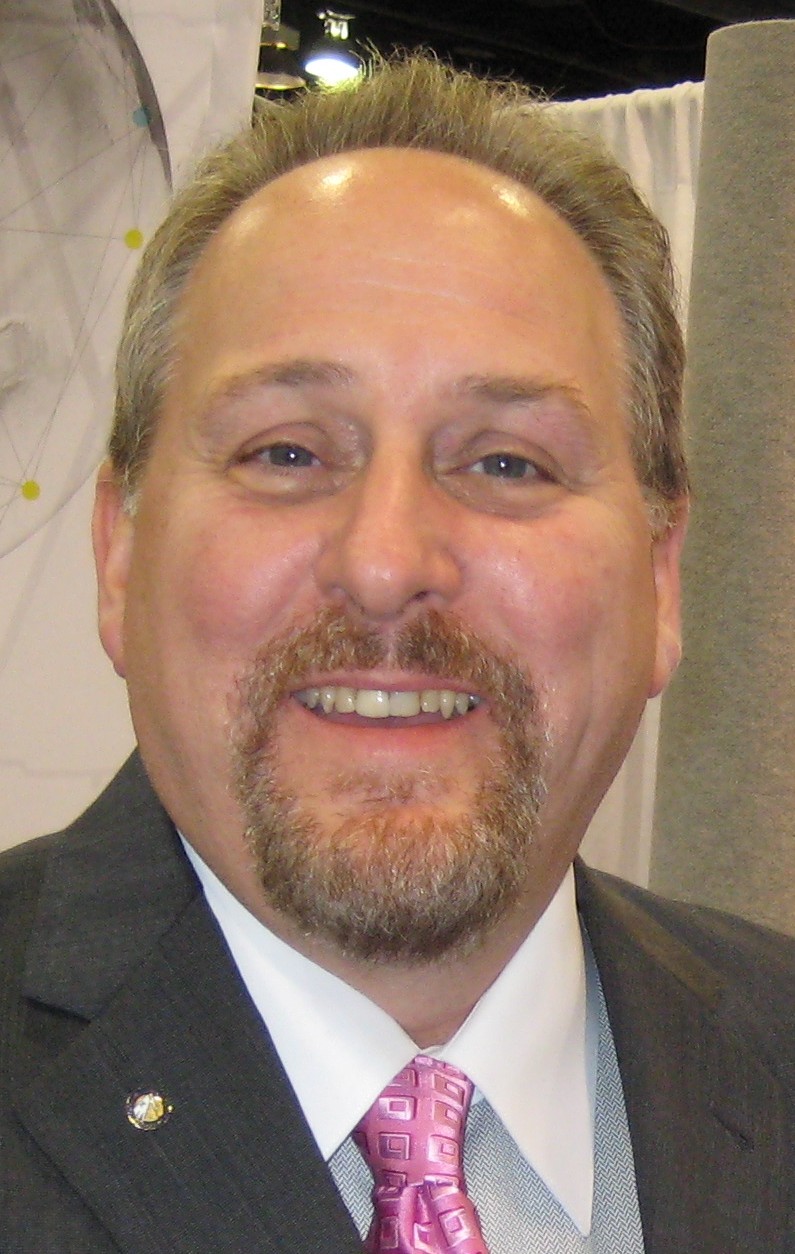
Mike Carrabba, Ph.D., Rogue Spectroscopy, Sparks, Nevada
Mike received his B.S. in Chemistry (magna cum laude) from Salem State College and his Ph.D. in Physical Chemistry from Tufts University where he focused on the utilization of laser-induced fluorescence to examine ultra-cooled gas phase molecules in a supersonic jet molecular beam. After graduate school, he joined EIC Laboratories where he became Vice-President for the Spectroscopy Division. He conducted a variety of spectroscopic research programs, including state-of-the-art Raman spectroscopy. After leaving EIC, he joined Chromex, Inc, a manufacturer of Raman spectroscopy systems, as Marketing Manager and subsequently became the OEM Division Manager at Jobin Yvon, Inc (Horiba). Mike was with the Hach Company where he was the Director of Hach Homeland Security Air Systems and the Director of Open Innovation.
Mike has also been a member of the SAS for over 30 years and served as President in 2018. He has also been honored with the SAS Distinguished Service Award and was named a Fellow of the Society. He has also received numerous awards for his service to the spectroscopic community, including the ASTM Award of Merit, ASTM Fellow, FACSS Charles Mann Award for Applied Raman Spectroscopy and the Williams-Wright Award for Industrial Vibrational Spectroscopy. He has also been honored with the Distinguished Service Award from FACSS/SciX.
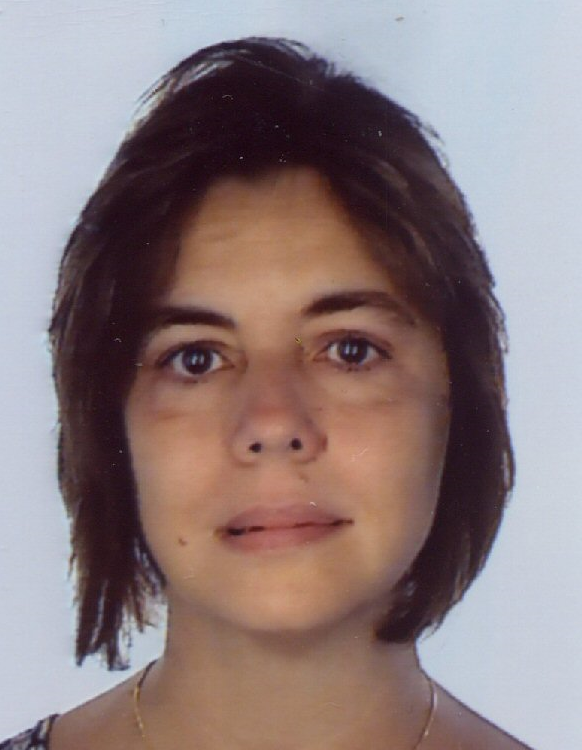
Heidi Goenaga Infante, LGC, Guildford, England
Heidi Goenaga Infante has over twenty five years of experience in elemental and speciation analysis. She earned her PhD from Oviedo University in Spain, followed by a postdoctoral fellowship at the University of Antwerp in Belgium. Since 2003, she has worked at LGC, where she is now a Science Fellow as well as Chief Scientist and Director of Chemical Metrology at the National Measurement Laboratory. She also chairs the Editorial Board of the RSC’s Journal of Analytical Atomic Spectrometry.
Her group’s research focuses on trace element speciation, metal omics and protein analysis, nanomaterial characterisation, quantitative bio imaging, and the development of reference materials and standards. Heidi represents the UK at the CCQM Inorganic Analysis Working Group and serves as LGC’s representative at ISO TC 24 for particle characterisation. She is also EURAMET’s inorganic analysis representative at the CCQM Key Comparison Working Group and participates in the EURAMET TC MC Strategy group.
Heidi has authored more than 185 scientific papers and nine book chapters. Her contributions have been recognised with the 2020 Lester W. Strock Award from SAS and the 2023 European Award for Plasma Spectrochemistry. She is a visiting Professor at the University of Strathclyde and an Honorary Senior Research Fellow at the University of Liverpool in the UK.
Jürgen Popp, Leibniz Institute of Photonic Technology, Jena, Germany 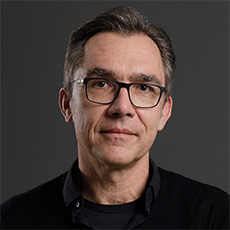
Jürgen Popp is an internationally recognized leader in spectroscopy and biophotonics, known for pioneering the translation of spectroscopic technologies from fundamental research into clinical and biomedical applications. He studied chemistry at the Universities of Erlangen and Würzburg, received his PhD in Chemistry, and conducted postdoctoral research at Yale University. After completing his habilitation at the University of Würzburg in 2002, he became Chair of Physical Chemistry at Friedrich Schiller University Jena and, since 2006, Scientific Director of the Leibniz Institute of Photonic Technology (Leibniz-IPHT), where he has established a globally leading research environment in biomedical photonics and spectroscopy.
His research focuses on vibrational spectroscopy, particularly Raman spectroscopy, and its application to biomedical diagnostics, infection research, oncology, and precision medicine. His work has significantly advanced the development of label-free spectroscopic approaches for real-time molecular analysis in complex biological systems.
Professor Popp has authored more than 1,140 peer-reviewed publications cited over 44,600 times (h-index 88) and holds 21 patents. He has delivered more than 200 invited talks worldwide, including over 60 plenary and keynote lectures.
He serves as Editor-in-Chief of the Journal of Biophotonics and the Journal of Raman Spectroscopy and has received numerous international awards, including the Pittsburgh Spectroscopy Award and the Charles Mann Award (FACSS), as well as an honorary doctorate from the University at Albany.
2025 Award Winners
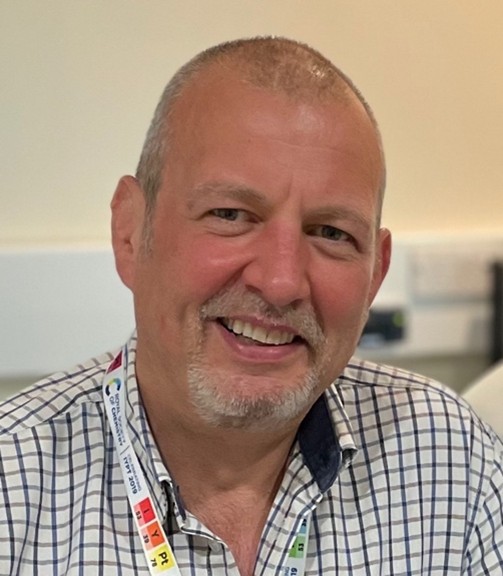
Professor Duncan Graham
Duncan Graham is a Distinguished Professor, Associate Principal and Executive Dean of the Faculty of Science at the University of Strathclyde in Glasgow. He was appointed as a lecturer in 2002 at the University of Strathclyde and promoted to professor in 2004. In 2007 he was elected to the Fellowship of the Royal Society of Edinburgh then awarded the RSC’s Corday Morgan prize in 2009, a Royal Society Wolfson Merit Award in 2010, the Craver Award of the Coblentz Society, a Fellows Award from the Society of Applied Spectroscopy in 2012, the RSC’s Theophilus Redwood award in 2016 and the FACSS Charles Mann Award in 2017. He served as Editor in Chief of the RSC journal Analyst for 7 years and has just started as Editor in Chief of the RSC journal Chemical Society Reviews. He was president of the analytical division of the Royal Society of Chemistry (2017-2020), chair of the analytical chemistry trust fund (2017-2020) and then chaired the Publishing board of the RSC as well as serving as a trustee (2020-2024). He has published over 300 papers with 17 patents and has supervised over 70 PhD students and 40 postdoctoral researchers. His scientific interests are in developing new diagnostic assays based on nanoparticles and spectroscopy with target molecules including DNA, RNA, proteins and small molecule biomarkers.
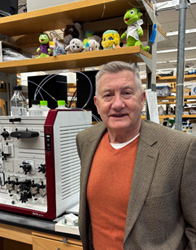
Professor R. Kenneth (Ken) Marcus
R. Kenneth (Ken) Marcus is the Robert Adger Bowen Professor of Chemistry at Clemson University. Marcus received B.S. degrees in Chemistry and Physics from Longwood College in 1982 and his Ph.D. in Analytical Chemistry from the University of Virginia in 1986 under the tutelage of W. W. Harrison developing new glow discharge optical emission and mass spectrometry (GD-OES/MS) sources. He began his academic career that year at Clemson University, where his early program included the invention and practical development of radio frequency (rf) powered GD sources, generating a number of patents. Efforts then turned to looking at ways to introduction liquid chromatography eluates and particulates into GD sources. Over the last 15 years, efforts have moved from low-pressure to atmospheric pressure GD sources, specifically the liquid sampling atmospheric pressure glow discharge (LS-APGD) sources. These microplasmas, originally developed for OES operation, are the heart of an ultrahigh resolution mass spectrometry program, wherein the devices are coupled to Orbitrap mass spectrometers. Those efforts began in collaboration with PNNL and now with ORNL, where again multiple patents have evolved. Through the course of his career, Marcus is most proud of the 45 Ph.D. graduates from his laboratory, many of whom are now leaders in the field.
Honorary Members
| S. Michael Angel |
Sandy Asher* |
Arnold O. Beckman* |
Freeman Bentley* |
| John Bertie |
LaVerne S. Birks* |
Robert R. Brattain* |
Frederick Brech* |
| I. D'Arcy Brent II* |
William R. Brode* |
H. Howard Cary* |
John Chalmers |
| D. Bruce. Chase |
Forrest F. Cleveland* |
William W. Coblentz* |
Norman B. Colthup* |
| Bryce L. Crawford, Jr.* |
John A. Dean* |
M. Bonner Denton |
Rina K. Dukor |
| Velmer A. Fassel* |
William G. Fateley* |
John R. Ferraro* |
Duncan Graham |
| Jeanette Graselli-Brown* |
Peter R. Griffiths |
Herbert S. Gutowsky* |
Joel Harris |
| George R. Harrison* |
Roland C. Hawes* |
Gerhard. Herzberg* |
Gary M. Hieftje |
| Tomas Hirschfeld* |
Edwin S. Hodge* |
John F. Jackovitz* |
Richard Jarrell* |
| William I. Kaye* |
Wolfgang Kiefer |
Gordon F. Kirkbright* |
Jack L. Koenig* |
| Edwin K. Jaycox* |
S. Roy Koirtyohann* |
Jaan. Laane |
Ira W. Levin |
| Herman A. Liebhafsky* |
Richard C. Lord, Jr.* |
Alan G. Marshall* |
William F. Meggers* |
| Melvin G. Mellon* |
Robert E. Michaelis* |
Foil A. Miller* |
Terry Miller |
|
Larry Nafie
|
Kazuo Nakamoto* |
Henry H. Nielsen* |
Alfred O. Nier* |
| Isao Noda |
Karl Norris* |
Richard A. Nyquist* |
Nicolo Omenetto |
| Yukihiro Ozaki |
Richard Palmer* |
Earl K. Plyler* |
William J. Poehlman* |
| Theodore C. Rains* |
Geraldine Richmond |
Harry Rose* |
Anton Savitsky* |
|
Alexander Scheeline
|
Borden F. Scribner*
|
Heinz W. Siesler |
Charlotte M. Sitterly* |
| Walter Slavin* |
Frank H. Spedding* |
Lester W. Strock* |
Mitsuo Tasumi |
| Richard Van Duyne* |
Isiah Warner |
G. Vernon Wheeler* |
Charles L. Wilkins* |
| E. Bright Wilson* |
James D. Winefordner* |
Ray Woodriff* |
Norman Wright* |
| |
|
|
|
* - Deceased
|